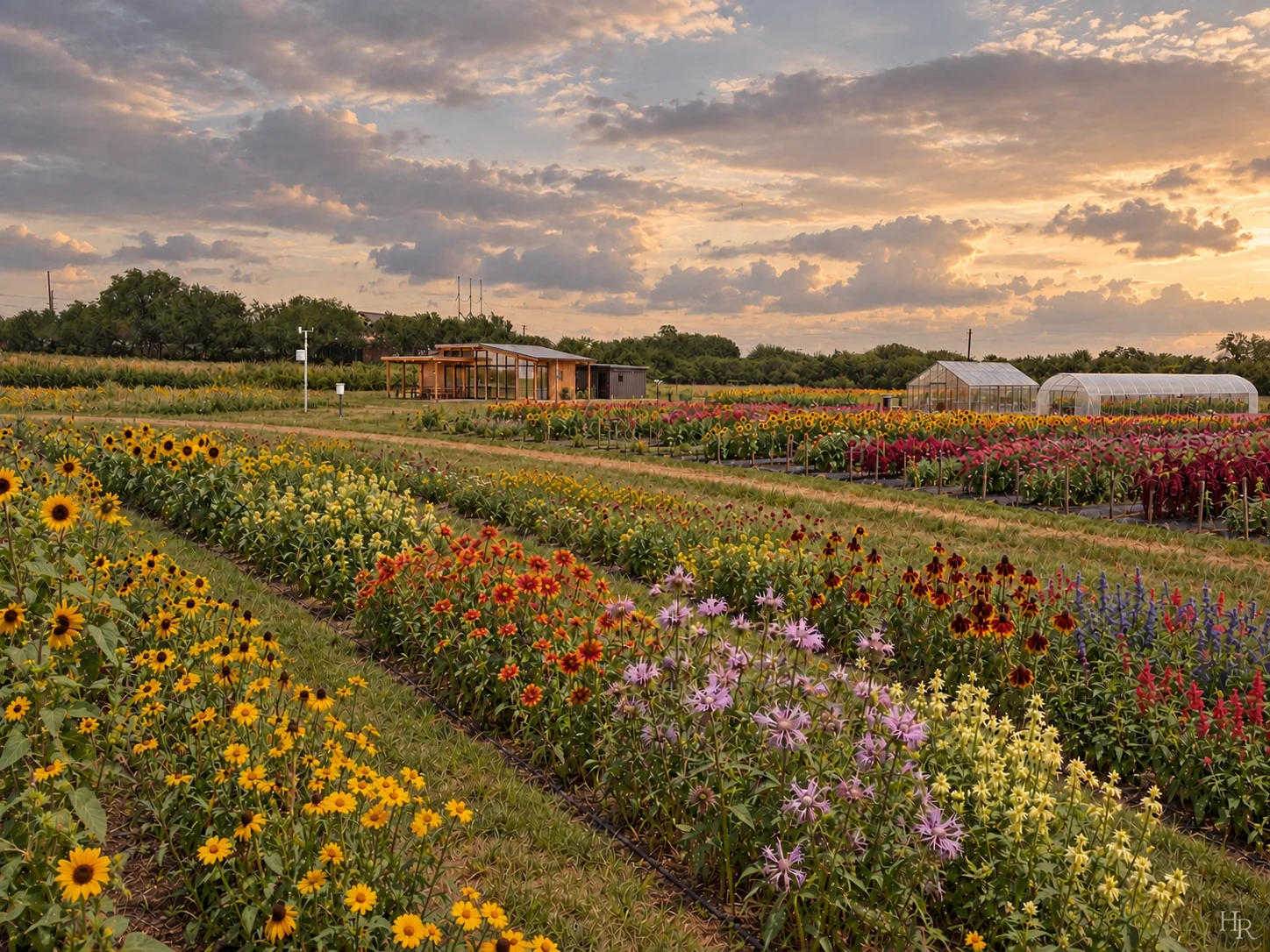
Soil & water
What can this ground support?
We’ve collected soil samples and received the results. Those results, along with where water collects after rain, help guide the planting plan.
Read the field notes ↗ Hollow Thistle RanchRIVIERA, TEXAS
We’re learning what grows well here, how water moves, and what the soil needs. These are the questions, notes, and plans behind that work.
Soil, water, and flowers—each helps us understand the others.
What can this ground support?
We’ve collected soil samples and received the results. Those results, along with where water collects after rain, help guide the planting plan.
Read the field notes ↗Which flowers earn their place?
Our planned flower trials will look at how well each crop grows, how long the cut stems last, and the water and work it takes to grow them.
Explore the trial collections ↗What changes when we return?
We’re following the native plants already here and planning restoration separately from the cutting rows.
Native life & conservation ↗Flowers, soil, and water, as we found them.
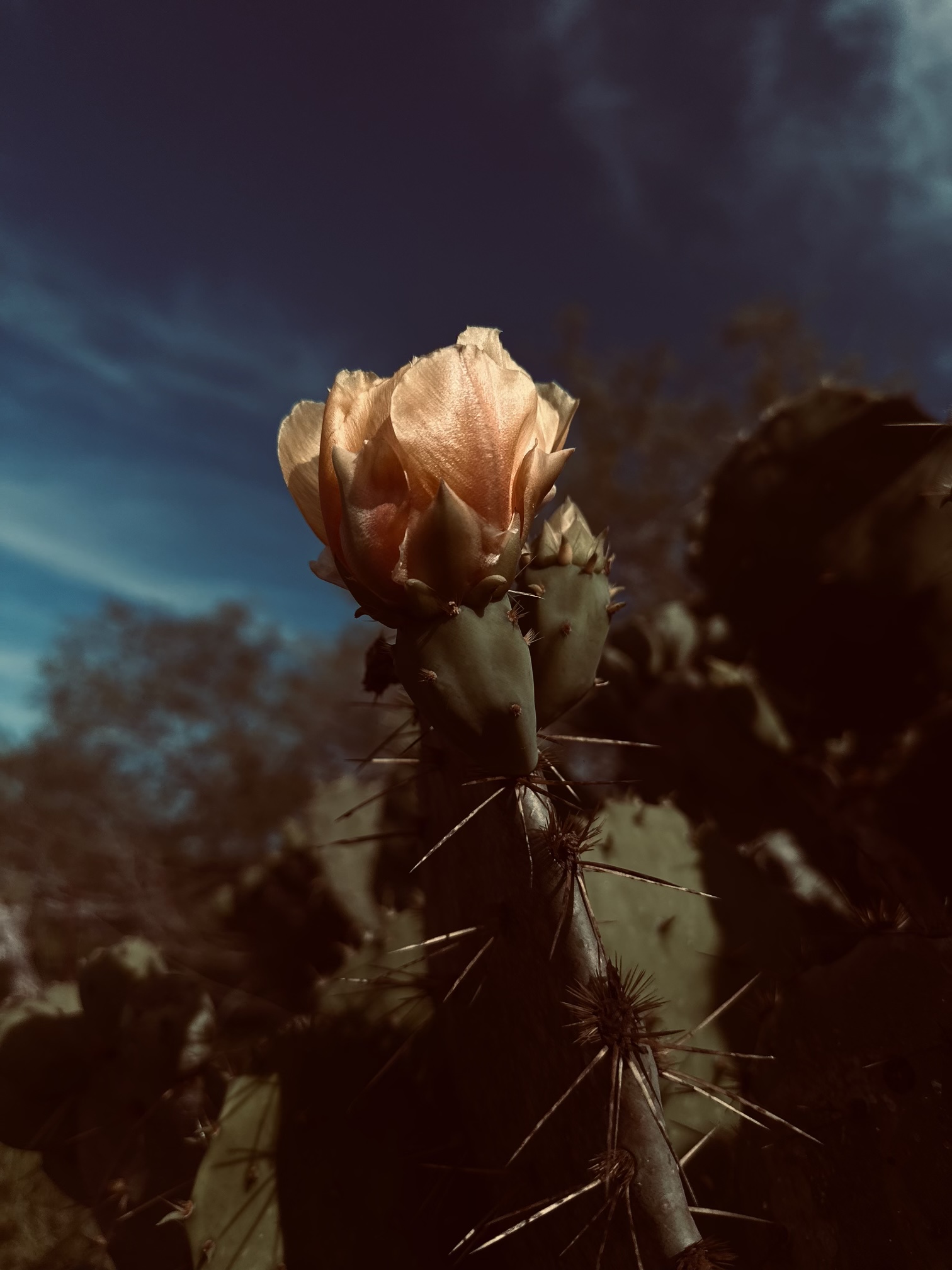
The cactus bloomed without asking permission from the landscape around it. Sharp edges. Soft color. Stillness beside survival. There is something honest about native things. They do not apologize for adapting to harsh conditions. They simply continue becoming. The land does not bloom loudly. But it blooms anyway.
—HTR
The land is speaking in slow ways now. The grasses are telling the truth. The ground beneath the canopy feels rough and compacted — tight, heavy, holding more than it can move. It isn’t asking to be conquered. It’s asking to breathe. To be opened carefully enough for air, water, roots, and movement to pass through freely again. Maybe restoration begins there: not with force, but with observation. With patience. With learning the difference between land that is resisting and land that is exhausted. Today held chalk maps, roadrunners, long shadows, and quiet study from the porch floor. A child traced blue rivers across warm concrete while the pasture waited beyond the posts. Some maps are made before children know they’re drawing the land. Maybe the same is true for restoration.
—HTR
It rained around four. Enough that the lights went out. Then came back. Then went out again. Three times the house reminded us that weather still gets a vote. By evening, I took the camera outside. I wasn't looking for a bird or a snake or something rare. I went outside to photograph dirt. The grass. The dead things mixed with the living things. The places where nothing seemed to be growing at all. A few hours earlier, rain had fallen over all of it, but by sunset the land already looked different depending on where I stood. There were little holes in the earth I couldn't explain. So I didn't. I photographed them. An old tree stood nearby with part of itself open to the evening light. Cracks ran through the exposed wood. Tiny holes interrupted the rings. Above them, the canopy was still green. Not everything carrying damage is finished. Not everything green is thriving. Not everything bare is dead. And not everything we don't understand needs a name immediately. The question wasn't whether water had fallen. I knew that. The question was: Where did it go? This is simply the land on September seventh. After the rain.
—HTR
The notes give us somewhere to start. These are a few questions we want to follow.
Why does water linger in some places while nearby ground looks dry?
How does the soil beneath the trees differ from the open ground—and what does each need before planting?
Which flowers give us good stems, hold up in a vase, and make sense for the work and water they need?
Which native plants return each season, and when do they bloom and set seed?
Working on similar questions? We’d like to compare notes with growers, researchers, and Extension educators.
Connect with HTR ↗The planned Living Classroom will bring this work together: a place to study the growing rows, share what we’re learning, and host educational visits.
The field station is a later phase. For now, the learning starts outside.